Sunday, 29 December 2013

diworsification


http://digitalleaders.co.uk/wp-content/uploads/2013/01/10859543-christmas-tree-from-digital-electronic-blue-circuit-and-lights-300x300.jpg
Alas its that time of the year again and dam ... so few posts this year, many apologies. Its been a good year financially, reached a personally satisfying PnL across all revenue streams but holy crap its been hard. Running 3 gigs at the same time, but thats not perverse enough, so I made sure 2 of them are on completely inverted time zones... literally, JST ( Japan Standard Time) = EST + (almost) 12H ... AM == PM. Luckily everyone involved is understanding.

Have always had some weird sleeping patterns, starting in high school when would do caffeine fueled, goa psy trance blaring, double all nighter code/hack/phreak sessions, starting Saturday afternoon, thru Sat night, thought Sunday, all the way through Sunday night thru Monday morning, take a shower and go to school. No doubt school is pretty useless at that point but meh. Sadly the body at 15yo vs 30yo are two very different things with my body creaking, cracking and complaining all god dam year - holy crap im getting old!

One of the best lessons this year was how much different the end-of-year PnL looks with multiple revenue streams. Non-(time)-linear PnL is such a beautiful thing. Thus CY2014`s first goal is replacing the consulting revenue with product revenue. The consulting group I worked with are a great set of people with minimum bullshit but at the end of the day, once the billable hours stop, so does the cash thus keeping you on this perpetual trade of time for money. The plan is developing a product targeting the non-financial sector and let it grow / shrink organically or just be happy in a small niche. Ultimately, the hardest problem is finding a niche that returns well but is not a huge time sink.

On the trading front need to push my comfort zone, building out a different class of HF strategies. No doubt will loose money for a while, but so far my trading experience is, its alot like learning to ride a bike - you can not teach it, you just need to do it and learn from the mistakes and gain intuition. But here`s the trick, the experience you gain isnt so much from watching the market, you can watch it all day long and get no where. The most important part is competing with other players, analyzing them, sizing them and of course fighting with them. So while they (and everyone else) are beating the absolute shit out of you, you`ll realize in that pool of your own blood some subtle perspective of the interaction that completely changes your game.

Happy Christmas & New year !

Friday, 15 March 2013

Tale of two sockets


Once upon a time in a far away place there was a socket... 

The term socket has different interpretations, to those on the left in the network world it usually refers to a Berkely sockets aka socket(AF_INET, _ ... ) send/recv. 

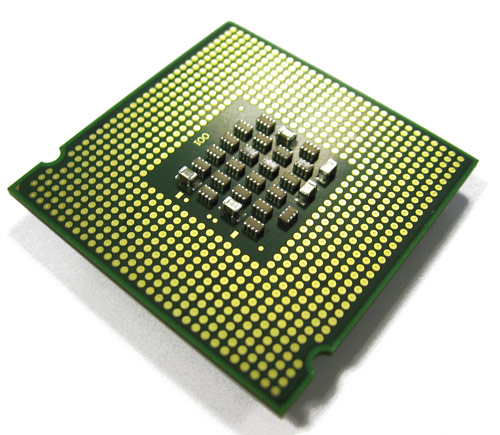
To those on the right in LSI land it means a place where you plug in an ASIC. Today we`re talking about the latter, the space where you plug in (usually) a CPU.

Recently faced an unusual timing problem - a bit of code was taking negative 1 to 10 usecs. Under other circumstances would have been delighted the code was running so fast yet nature being the stubborn SOB that it is, prohibits such things... atleast outside the Physics department.

It got me thinking, questioning every aspect of the code and hardware with one nagging question popping up.

Is the cycle counter between two sockets synchronized?

Its well known and documented that in a post Nehalam age the intel cycle counter is rock solid, invariant to power states, between cores and also immune to turbo boost, the latter being a pain the ass if you really want to count cycles. Why does it always tick over at the frequency rate listed on the box ? seems the Nehalam intel designers decided rdtsc & friends should be based on a clock in the creatively named "UnCore" which sits way out near the IO logic, thus centralized and the same for all cores.

rdtsc on a single cpu socket machine has been a trusted friend since the good ol Pentium 90 days but never tested its behaviour between cpu sockets. Yet is it syncrhonized between two cpu sockets? the short answer is, yes it is very well synchronized between cpu sockets as mentioned in various placed. However ... being the skeptical person I am - don`t believe writings on teh itnerwebz (such as this blog!) and so.....  a test.

The test is simple, run 2 hardware threads(HWT) on 2 different sockets. Each HWT will update a shared cycle counter in memory. The expected result is, the local HWT cycle counter should *always* be greater than the memory value.

Why ? example case 1

Cycle |         HWT 0     |  HWT 1
   0  |  sample           |
   1  |  write to memory  |
   2  |                   |    sample
   3  |                   | write to memory

Or the perverse edge case

Cycle |         HWT 0     |  HWT 1
   0  |  sample           |      sample
   1  |  write to memory  |   write to memory
   2  |                   |

**1 - in the smallest font possible hoping no one will read this... the test fails when the 64b cycle counter overflows
**2 - yes im completely delusion to think the above is anything close to the voodoo magic that goes on inside a real intel cpu

Presuming the cycle counter is synchronized  then every time we sample the cycle counter, the counter will be higher than whats written in memory - because whats in memory is a past cycle count, which by definition is less than the current count.

in code  (g_tsc is the shared memory value)

        u64 memory_tsc = g_tsc;
        u64 tsc = rdtsc();
        s64 dtsc = tsc -  memory_tsc;
        assert(dtsc >= 0);

This works if the two cycle counters (one for HWT 0, one for HWT 1) are synchronized and fails otherwise. There is a problem tho... if we run this as is, it fails.

Theres 3 (possibly more?) reasons why

1) cycle counters are not perfectly synchronized
2) x86 micro architecture is re-ordering the memory operations
3) compiler re-ordered the load.

Checked the asm and 3) is not true thus suspect 2) as x86 is notorious for its (very) relaxed memory ordering so we modify the above slightly by adding an lfence instruction. What this does is serializes all memory loads (but not stores) with respect to the current instruction fetch stream - creating a barrier of some sort.

After this is added the program runs perfectly, thus conclude the cycle counter between sockets is perfectly synchronized, or closely synchronized.


Now we know their closely synchronized, the question is how close and does it explain my negative 10usec. To do this we run a histogram on what that delta between the cycle counter and the memory value which shows a range of 100-200 cycles, which at 3ghz is at most 66.66nses, likely the QPI cost between sockets. All in all thats pretty tight.

The down side, this was classic tunnel vision and not the cause of my negative latency number. The real cause was something way up the stack and far to embarrassing to write about here.!

Saturday, 16 February 2013

The Professional Trader


The definition of a professional trader is, "professional" meaning a method to support oneself financially and secondly "trader" describing the type of activity, thus a professional trader makes their living in the markets. 

According to our most trusted news site, CNN. The average salary for a freshly minted CS grad is $60,872 which means:


- $5,072 / month
- $1,268 / week
-   $253 / biz day

Now if we break that $253 / day into HF style trades it looks like

@ 1 share/ day     -> $253 net gain / share
@ 10 share / day  -> $25.3 net gain / share
@ 100 share / day -> $2.53 net gain / share
@ 1000 share / day -> $.253 net gain / share
@ 10,000 share / day -> $.0253 net gain / share
@ 100,000 share / day -> $.00253 net gain / share

At 100K shares / day with a *net* pnl per share of 0.253cents (less than a penny) we could make it work. At 10k shares / day with 2.53 cents / share profit also in the realm of feasibility. Note that 25 cents / share profit for every share is possible but think your pushing it to expect that consistently day-in-day-out in high volume. Remember this is per share, not per trade.

Now lets say we choose 10k shares @ 2.543cents / share net pnl, e.g. we`re trading the spread+a tick or two and our edge is say 10%. Meaning 60% of our trades make that 2.543cents, and 40% of the trades loose 2.54 cents, NOTE: in reality that kind of equally priced distribution abs(win) == abs(loss)  is highly unlikely. 

Result is we actually need to trade

   $254 = k * (0.6 * 0.0253 - 0.4 * 0.253) where k = 50K, so our 10K shares is now 50K shares.

Counting in trades lets say we`re trading lots of 100 shares, meaning we`re doing 500 trades / day. And lets say the market is open 6H / day which means 500 trades equally spaced is 6 H * 60Min * 60Sec / 500 trades = 43.2sec. e.g. thats one trade every 43.secs for 6 hours but actually its half that because you need to enter/exit the position, so we`re doing 1 trade every 21.6 seconds.
.
.
.


It starts to put this HF trading thing in perspective -> 1 trade every 21.6secs that makes 2.5 cents/ share on average, to makes $250 / day or $60K / year..... a nice healthy dose of reality. 

What im doing now is diversifying my income strategies. Some of this is trading strategies, some un-related and others quite frankly you just would not believe. Having 20/20 hindsight theres so many things I would have done differently, but easily the most important would be to build non-trading income strategies, that cover your bills when the trading hits a rough patch - because when your starting out its just one endless bumpy rough ride.

Thursday, 3 January 2013

Round 2


Surprising how time flies, its been 6months since the end of Round 1 with Round 2 closing now. Its been one hell of alot of fun, albeit soul crushingly painful at times. Yet on the whole 2012 has been a good year - not much pnl but gained a ton of experience.

Have been pretty quiet about what I`ve been up to, but unfortunately the current strategies do not have enough juice to make it worth continuing. It sucks ass but thats reality thus need to re-group yet again, pivot and soldier forward.

Here`s the gross PnL over the last 6months, real exchange, real trades, real money.


Looks nice, grossed ~ $100+k in 6months, even impressive unless you trade HF yourself. In which case you notice the GROSS part and know how badly you get screwed by broker/exchange fees & tax, read the net pnl is only a fraction of this. The other realization is, for a HF strategy, for half a year this kind of gross pnl is quite frankly utterly shit.

But wait I hear, its a HF strategy, improve the latency! the latency man! the latency....... bake it into an fpga, build it for some network processor, hell go build that liquid nitrogen cooled 5Ghz overclocked monster machine and all your problems are solved... or maybe not.

Sadly better latency will not change anything.

So... show me the numbers! Lets measure the Tick2Trade register-to-register time, which means the nano(pico) second when the NIC`s register says there is a packet ready, to the nano(pico) second you bang the NIC`s register to say kick this packet. Visually it looks like.


When you talk about latency, most people are using the socket-to-socket number. If you have lots of cash to burn, then you can purchase a Corvil and use the wire-to-wire number -  the real absolute latency. We didnt have that choice so the register-to-register number gives a close approximation, as the latency jitter in the HW is fairly consistent (at the micro second level atleast)

Without further latency lol... here`s the register-to-register latency, real trades, real money, real exchange.


Above plot is the histogram of all trades over the last 6 months, with nanoseconds on the x-axis. As mentioned above, this is the register-to-register plot, so add 1usec (Rx) + 1usec (Tx) for PCIe transfer + NIC asic  shenanegins + 10G SerDes/PHY to get the wire-to-wire latency. As you can see the median internal latency ~ 4.5usec putting it at under 10usec wire-to-wire, with a 95 percentile @ 8usec, 99 percentile @ 10.25usec But why is it multi-modal? The answer... the code evolved/improved over time so if we plot the above and compare with the last 10 trading days we get.


Which you can see the median for the last 10 sessions is around 3.7usec (~6usec wire-to-wire), 95 percentile @ 5usec, 99 percentile @ 6.75usec with the multi-mode clearly due to different versions of the code. First version took a bit over a month to code up (feed+book+gw+strat+other), 2nd version a week or two (optimization), all running on standard hardware nothing fancy.

I could reduce this to 1 or 2usec wire-to-wire with an FPGA but its completely pointless. Why? because at this level of latency, its irrelevant if your half the latency of your competitors. As the latency jitter inside the exchange is orders of magnitude more than the delta between you and your competitors - remember this!

Net result? technology and speed alone will not win you trades, this game is over / drawing to a close. I`ve seen this on multiple exchanges and usually boils down to the exchange not having any clue at this level.

.
.
.


Maybe one day exchanges will wake up (or have their ass kicked) and hardware timestamp every packet at the BGP endpoint (exchange side switch), and use this wire hardware timestamp as the priority ordering into the matching engine...  but that's a pipe dream / pure fantasy. Until then these kinds of ultra low latency trades is a battle of heavy weights slogging it out for 16rounds with 16oz gloves + appropriate grease to lube the exchange.

Whats next? its clear to me higher strategy IQ is the way to go, thus my machine learning rant the other day. But I need to pay rent so available for tech contract work - see skillset

For contract work / interesting projects / collaborations / etc etc hit me up at hacking.nasdaq@gmail.com

Monday, 24 December 2012

SVD of HFT

Cant believe it, first post on this blog was exactly 3 years ago wow... seems like such a long time. 3 years ago I couldn`t tell you the difference between buy, sell, bid, ask, long or short yet some how the projects and code I`ve written during this time now checks or trades, millions, tens of millions, hundreds of millions and sometimes billions of dollars every single day. The depressing part? all the time and effort in finance has not translated into George Washingtion`s. in my bank account.... bugger.


So when your imagination and reality are so divergent its a good  times to step back and work out what your missing and not even consider the how or where of the equation - just focus on the what. Lets take a high level look at the game from the top down.

HFT game has 5 major components

1) Speed / Deterministic / Technology
2) Commissions / cost structure
3) Influence with the exchange
4) Capital
5) Strategy

Speed / Deterministic / Technology 

This is the classic arms race, bigger faster, better. Its very true technology is a large component of any HF strategy however the trap technologist (like myself) fall into is, they believe technology alone can beat the market. What we dont realize is our technology edge starts and ends at the cable plugged into our box/switch. Theres so many other moving parts that are out of our control that tips the balance way into the red.
In Round 1 any technology edge I had ended when it entered at the brokers pre-trade risk checks let alone entering the exchanges infra. In Round 2 have best in class access to the market but the edge is gone once the packet has left the NIC. Net result, speed/technology is important but you cant win a trade with it alone.

Commissions / cost structure

HF strategies are unique because the per trade profit is very small, which makes it extremely sensitive to the per trade and monthly recurring costs. For example if your trade makes +100 cents on a win and -100cents on a loss with say 100 shares eg. 1cent/share. Say your broker, the exchange, the SEC takes 25 cents or 1/4 of the profit.

This means you need a 15% edge (65% of the trades profitable) just to break even.

Yet if your total fees is 5 cents vs 25 cents you need only a 3% edge (53%) of trades to break even.

A delta of 12% profitable trades, means you need a really good signal, which is extremely difficult. Thats just to break even!

Influence with the exchange

This one is probably a bit surprising to many as in theory an exchange is equal access for all participants. Thats the theory, yet in practice an exchange has finite manpower and equipment which results in the dude trading $100 / day vs the dude trading $100MM / day gets vastly different levels of service.

Aside from man-power theres always political / boys club games and really is a catch-22 situation. To join the club you need to trade massive volumes, but to trade (profitably) massive volumes you need A class access into the matching engine.

Why is it important? Your technology edge ends at the BGP endpoint (your router/switch) with a shit ton of other crap between that endpoint and a trade thats in the exchanges control.

Capital

For the HF game capital is usually not a problem. The true believers are flat at the end of the day with no overnight / borrowing costs. Intraday your capital just limits the sizes of your position. The one thing capitial does give you is, market access and influence with an exchange. Any tier one prime broker will want a few million dollars deposit before they will even talk to you. Next step down requires a few $100K and so on. For now capital is not an issue.

Strategy

And finally strategy, this is the true leveler. If you have excellent strategy then all the above can become noise. Yet the inverse is not true - you can have the best technology in the world but it will never make a bad strategy good.

This is by far my biggest weakness and the skill I need to develop further, but what exactly needs to be learnt? The what is not an easy question. The first 6months of this expedition was largely wasted doing essentially some form of technical analysis - if signal X crossed signal Y then buy/sell kind of strategy development. Im sure it works for someone but thats not the HF game to play.

So what`s missing? its how to mine the data and what to mine to gain a statistical edge. The how to mine is an easy technology problem, the what to mine is not. Im convinced machine learning is the way forward as its the next logical step beyond stat arb. After all isnt stat arb a form of the most basic machine learning? guess it all depends on your definite of learning.

Whats next? Bayes, Markov, Kernels, Boosting and Kaggle mmmm Kaggle lol

Sunday, 2 December 2012

Top 5 reasons my (your) backtest is bullshit

Alot of the time when building/backtesting strategies you get a result thats just too-good-to-be-true. When this shows up the best way test your brand spanking new million *cough* dollar *cough* strategy a day is to

1) flip the sides/signals - if possible e..g not capturing bid/ask spread..
2) random() is your friend, replace random() with your secret sauce signal gen and see how it goes.

My preference is to use a random() strategy or an "always trade" strategy as its less intrusive. If it generates million dollar backtested profits... you know its complete and utter bullshit. 

So in dave letternman top 10 style..


top 5 reasons my (your) backtested results are bullshit


number 5...  your cost structures are wrong

Part of the shock and horror of HF trading is the realization your being screwed on all angles in all holes by everyone. When ppl think about trading its all about the (sell price - buy price) == money in your bank account. Sadly because the gross margins are so low & with so many fees and taxs along the way, money in the bank isnt always that good..

Be sure to include

1) exchange fees / rebates
2) SEC fees/taxs
2) brokers fees
3) your (not) friendly capitial gains tax man
4) [optional] exchange rates

Got totally screwed by 4) this year - Japanese Yen / USD really hurt

number 4 ....   You have built a time machine, cool can I buy one?

Need to seriously change my trade idea scratchpad / research framework soon to completely eliminate this. For now using essentially arrays of data, with each index being a time/event sample. Problem is its all too easy to do a if (Price[t] > Price[t+1] ) kind of compare which, takes a peek into the future and can heavily bias your results. The more painful and subtle variation is using multiple datasets/signals that are not perfectly synchronized e.g. A signal is one time/event ahead of the others.

The only way around this is to make this impossible, say strategy has no access to the array/precalced data or be very very careful. My approach for the moment is the latter. When I started would make this mistake more often than I want to admit but rarely screw it up these days - too many hours lost chasing wtf is this random() strategy profitable


number 3.... EventSeries != TimeSeries

Most exchanges will pack multiple market data events into a single UDP packet making the market data event stream appear as a time series, when it is not. Simple passive example strategy would be, if BBO price level has less than X orders/qty then replace away/deeper into the book. If you equate the event stream for a time series then the backtest will always avoid deep, aggressive trades. Why? because when each order gets wacked by some massive aggressive trade, each and every passive order that gets filled, an individual market data update is generated.

Now. if you treat each of market data update as a discrete event, your strat/backtest can see each update individually until it reaches the minimum X level and you replace away. aka a perfect 0 latency system.

Whats wrong? In real-time all the orders get wacked at the same time including yours! with a group of market data events actually being an atomic operation.


number 2.... resetting position at start-of-day

when doing multi-day backtesting its easy to forget the strategy is still open at the end of the day. e.g. strategy exit condition has not triggered as its usually in a loss state. Simplest example of this is, for every 1minute buy SPY aggressively then recycle it passively at +X ticks and start the day with no position. What happens is you have 100% winning trades! Why? because when the market moves against you the strategy just sits there drifting away from the bbo. (in a 10ft pool of red) waiting for that passive exit. Then when the market closes, your backtest resets the strat for the next day that loss is simply ignored, disappeared and never existed. If there were a wizard of oz, would certainly ask for such a button.

Always update the position/pnl after every trade - not just at the exit, and never reset between days.


number 1.... aggressively buying at the bid and aggressively selling at the ask.

Its so easy.. just aggressively buy at the bid, and aggressively sell at the ask for every tick, on every instrument for every exchange in the world and you, yourself, can bail Greece, Spain and probably half of the world no worries.

the problem is, in real life your aggressively buying at the *ask* aka paying the spread to fill now. I still screw this up all the time when testing out an idea. Usually by fiddling with different styles to enter/exit a trade then forgetting to revert the code back and preso.... $1M / day in pnl.

--------

 By now your either shaking your head saying how badly I suck, or quietly nodding about those indiscretions you never told anyone, or laughing your ass off saying yeah been there done that, will never do again.

oh the shame... lol


Thursday, 25 October 2012

fpga paper

Ran into this advertisement^H^H^H^H^H peer reviewed IEEE paper today


Its quite well written and covers alot of ground yet contains some pretty bad assumptions. Lets deconstruct

In the abstract:

"The application sustains 10Gb/s Ethernet line rate with a fixed end-toend latency of 1µs  – up to two orders of magnitude lower than comparable software implementations."

What they are saying is software latency for a brain dead strategy is 100usec? This is complete and utter bullshit, yes if you write shitty code your wire-wire latency will be 100usec +/- 25usec jitter. If you write tight code using standard hardware and know what your doing... can get under 10usec wire-to-wire no problem.

Next point:

"An initial line handling stage uses redundancy in the streams to replace any information temporarily missed due to packet losses in order to reconstruct the necessary parts of the  order book of the exchange."

This is pure magic, have nfi what their talking about here. How is it possible when you drop a market data packet you can reconstruct its symbol/price/side/qty/operation, in less than 1usec, in RTL on an fpga. Will concede given say 100msec or more AND significant delay in the stream e.g. you dropped a new quote X, but received the cancel quote X msg, its possible to take a good guess what was in the packet.... maybe they are talking about using the *cough cough* market data recovery channels.


Next point:

"Prices for all 8000 securities traded on U.S. Exchanges fit within the FPGA’s on-chip memory. The table size is scalable to support more symbols as required."

This is great but wtf? Guessing they are talking about a 8000 * 4bytes(32bit fixed point price only) * 2 (bid/ask) * number of venues to store the best bid/offer for a symbol. That easily fits in the block ram of a Xilinx V5 240T (note: block ram is memory on the die of the fpga and not to be confused with external memory e.g. DDR/QDR/SRAM)

Great but... how do they calculate what the BBO is? You need to store the entire book, which has to be stored in external memory because the working set is atleast 1GB. 

Why store the entire book? 

1) When you get an quote cancel message exchanges rarely have the price/qty/side/symbol in the cancel message. Typically its just the order id and/or quantity canceled, so you need to keep price/qty/side/symbol/orderid and more around to correctly process e.g. what qty is currently open for this order after Y quote cancel messages.

2) when a quote is deleted you need to remove it from the book, then iterate through the book to find the best price - read you need to keep the book in memory somewhere. The trick here is being smart in how and when you iterate to find the best price, e.g. sorting a mostly sorted list can be pretty dam fast.

3) .... and more but wasted too much time on this today.

... so are saying, we can store 8000 bid/ask prices ondie in the fpga for the rtl coded algo to use? hmm..

Its a great well written technical paper, probably one of the best papers on the subject however glosses over some more important details... as doe all academic papers on the subject.. aka yes just sit and hold that 30% draw down for 3 months and the pnl is beautiful.

/rant